Affiliate Disclosure: IronThaw may earn a commission when future partner links are added. This guide contains no paid placement, product-testing claim, or medical advice.

Short answer: Many home cold plunges need roughly 20–80 pounds of ice, but tub volume and the required temperature drop matter more than bag count. As a planning estimate, cooling 30 gallons from 70°F to 50°F may take about 30 pounds of freezer-cold ice; 50 gallons may take about 50 pounds. Start warmer than you think, add ice in stages, stir, and verify with a thermometer.

“Two bags” is not a useful universal answer. Twenty pounds can noticeably cool a small bathtub filled from a cold tap, yet do little in a large outdoor tub that has been warming in the sun. Ice size, freezer temperature, weather, insulation, and even when you step into the water all affect the final number.

The safest beginner approach is to treat the first session as a measurement test. Know how much water is in the tub, record its starting temperature, choose a conservative target, and learn what one bag does in your setup.

Cold plunge ice chart

The estimates below assume freezer-cold ice, water starting near 70°F, minimal heat entering during setup, and a tub filled to the listed volume before you get in. They are planning ranges, not guarantees.

Water volume Target 55°F Target 50°F
20 gallonsAbout 15 lbAbout 20 lb
30 gallonsAbout 20–25 lbAbout 30 lb
50 gallonsAbout 35–40 lbAbout 50 lb
75 gallonsAbout 55–60 lbAbout 75–80 lb

If your tap water starts at 60°F instead of 70°F, you may need about half as much ice to reach 50°F. If it starts at 80°F, expect substantially more. A covered, insulated tub in the shade will also hold the result better than a thin black container in direct sun.

A simple ice calculator

For water that starts well above freezing, this rough planning formula is useful:

Estimated ice in pounds = gallons of water × desired temperature drop in °F ÷ 20

Example: 30 gallons × a 20°F drop ÷ 20 = about 30 pounds of ice. This shortcut approximates the heat absorbed as freezer-cold ice warms, melts, and then mixes with the plunge water. It intentionally rounds the physics into something practical.

Do not mistake the result for a precision dose. Warm air, sun, a room-temperature tub shell, small melting cubes, and delays can increase the amount. Very cold solid blocks may last longer but cool unevenly unless the water circulates. Your measured result should replace the estimate after one or two trials.

Measure your real water volume

Manufacturer capacity often describes a tub filled to the rim, not the amount used during a session. You need room for your body to displace water and room for ice. Overfilling first can create a slippery overflow as soon as you enter.

Your usable volume may change with body size. Record the no-overflow level rather than trying to maximize water depth. If you are still choosing a basic setup, see how to cold plunge at home without a chiller.

How to add ice without overshooting

  1. Place the tub on a stable, non-slip surface with a safe exit path.
  2. Add water first, stopping below the level that accommodates your body.
  3. Measure the starting temperature in the center of the water, away from the tub wall.
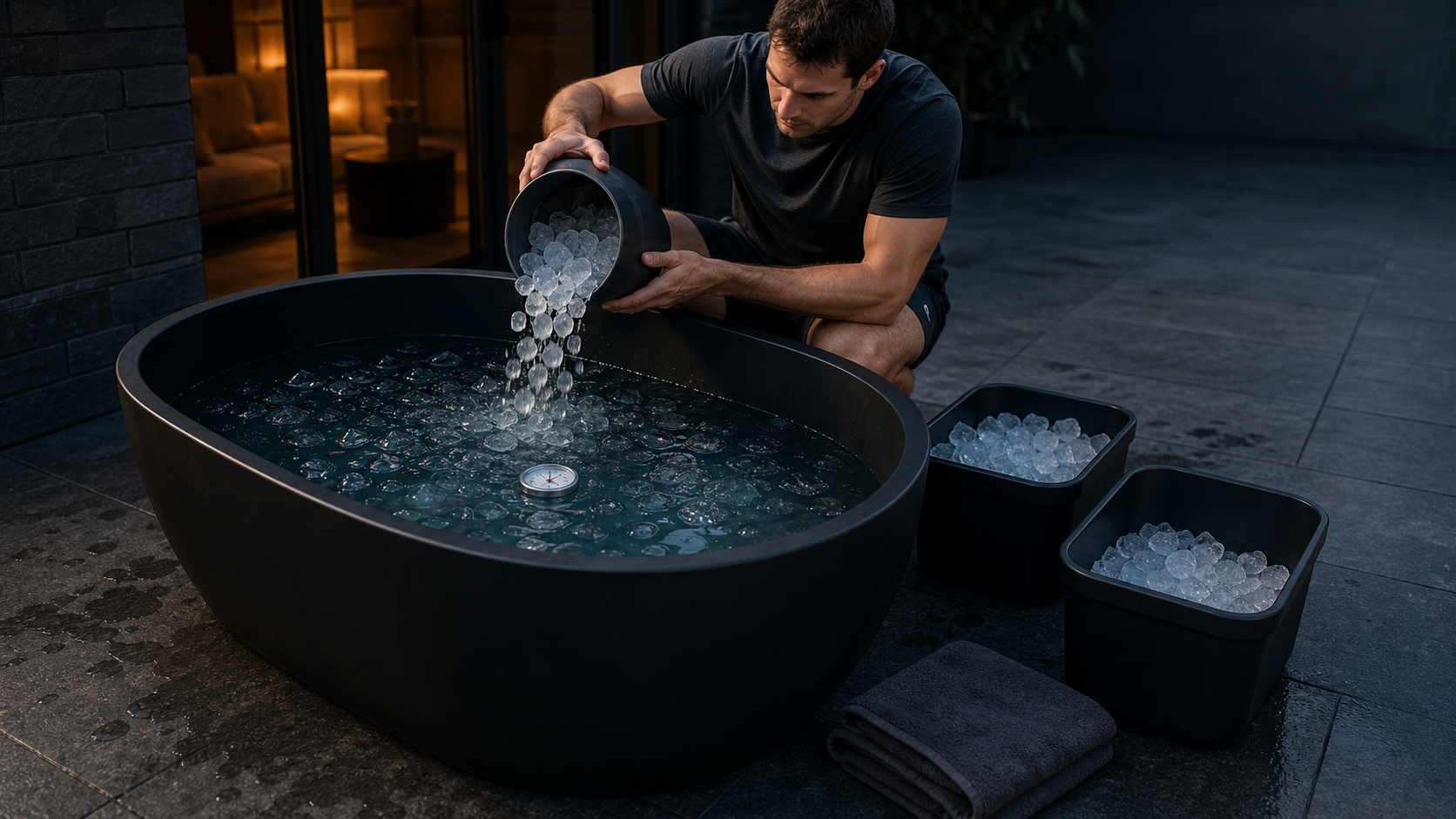
  4. Add about half of the estimated ice. Use a clean scoop or lift safely rather than dropping a heavy bag into the tub.
  5. Stir the water without putting hands or feet into a dangerously cold pocket. Wait a few minutes for the reading to stabilize.
  6. Add the remaining ice in smaller stages until you reach a conservative target.
  7. Remove large sharp pieces if they could scrape skin, obstruct entry, or create unstable footing.

Water near the ice can be much colder than water on the opposite side of a still tub. Mixing and measuring matters. If you add your body before the reading stabilizes, you lose the chance to understand the setup.

Choose a beginner temperature, not a contest

Many beginners can start with cool water around 55–60°F rather than racing toward ice-filled extremes. The sensation may still be intense, especially in a deep tub. Use the cold plunge temperature chart to match colder water with shorter exposure and gradual progression.

Cold water can trigger an involuntary gasp, rapid breathing, blood-pressure changes, and loss of coordination. Never plunge alone if you cannot exit reliably, never use alcohol or impairing substances, and keep your head above water. Review beginner cold-plunge breathing before entry—do not hyperventilate or perform breath holds in or near water.

Ask a qualified healthcare professional before cold immersion if you have a cardiovascular, blood-pressure, neurological, pregnancy-related, circulation, respiratory, or other relevant medical concern, or take medication that may affect temperature regulation or alertness. Exit immediately for chest pain, severe breathing difficulty, confusion, faintness, loss of coordination, or other concerning symptoms.

Cut ice cost and effort

If you reuse plunge water, do not assume cold temperature keeps it sanitary. Filtration, cleaning, and sanitizer compatibility are separate questions covered in the cold plunge water-care guide.

Frequently asked questions

How many pounds of ice do you need for a cold plunge?

Many home setups fall between 20 and 80 pounds. A rough estimate is gallons multiplied by the desired temperature drop, divided by 20. Measure the actual result before relying on that number again.

Is 20 pounds of ice enough for an ice bath?

It can be enough for a small tub or cool tap water. It will not necessarily cool a large, warm tub to 50°F. Starting temperature is the missing variable in most bag-count advice.

Should you add ice or water first?

Add water first, leave displacement room, record the temperature, then add ice in stages. This gives you better control and reduces overflow risk.

Can a beginner cold plunge without ice?

Yes. Cool tap water or a cold shower may provide a more manageable first exposure. Consistency and a controlled exit matter more than achieving the lowest number.

Bottom line: Estimate ice from gallons and temperature drop, but let your thermometer decide. For a 70°F starting temperature, plan around 30 pounds for 30 gallons or 50 pounds for 50 gallons to approach 50°F, then add it gradually. Browse more practical setup guidance on the IronThaw Blog.