Affiliate Disclosure: IronThaw may earn a commission when future partner links are added. This informational aftercare guide contains no paid product placement, product testing claim, or medical advice.

Short answer: To warm up after a cold plunge, exit carefully, dry off completely, remove wet clothing, add warm dry layers and socks, then move gently in a comfortable indoor space. If you are fully alert, a warm nonalcoholic drink can be useful. Do not chase an instant temperature swing with a scalding shower, sauna, or hard workout—especially while numb, dizzy, or unsteady.

A good cold-plunge routine includes the exit before you enter the water. Beginners often spend all their attention on temperature and breathing, then improvise while wet and shivering. A towel across the room, clothing with tight buttons, or a slippery route can turn an otherwise conservative session into an avoidable problem.

Rewarming should feel controlled and gradually easier. Your exact response depends on water temperature, immersion time, body size, room temperature, wet clothing, wind, and individual health. Use the steps below as practical preparation—not as permission to tolerate severe cold symptoms. If you are still planning your exposure, start with the cold-plunge temperature chart and a short beginner session.

Post-cold-plunge warm-up plan

Stage What to do What to avoid
ExitStep out slowly, use a stable support, and pause before walking.Rushing across a wet floor or standing abruptly.
DryTowel skin and hair; remove the wet swimsuit.Keeping cold, wet fabric against your body.
LayerPut on dry base layers, socks, a robe or sweatshirt, and slip-on shoes.Complicated clothing that is hard to manage with cool hands.
MoveWalk gently indoors or make easy arm and leg movements if steady.Hard exercise, jumping, or balance-demanding drills.
MonitorStay with another person if new and confirm you are steadily improving.Ignoring confusion, poor coordination, chest symptoms, or worsening cold.

1. Make the exit slow and stable

Cold water can leave your feet numb and your movement less precise. Place a nonslip mat beside the tub, keep the route clear, and use a secure rail or stable edge if your setup provides one. Step out rather than springing up. Once upright, pause for a moment and confirm that you are not lightheaded before walking.

If you feel faint, confused, unusually weak, or unable to move safely, sit or lie down in a safe place and get assistance. Do not walk alone toward a shower or stairs. A beginner should ideally have a responsible person nearby, particularly when trying a colder temperature or a new setup.

2. Get dry and remove wet clothing

Water and soaked fabric continue pulling heat away from the body. Towel your skin and hair, then change out of the swimsuit as soon as privacy and safe footing allow. Patting dry is enough; the goal is to remove moisture, not scrub cold or numb skin aggressively.

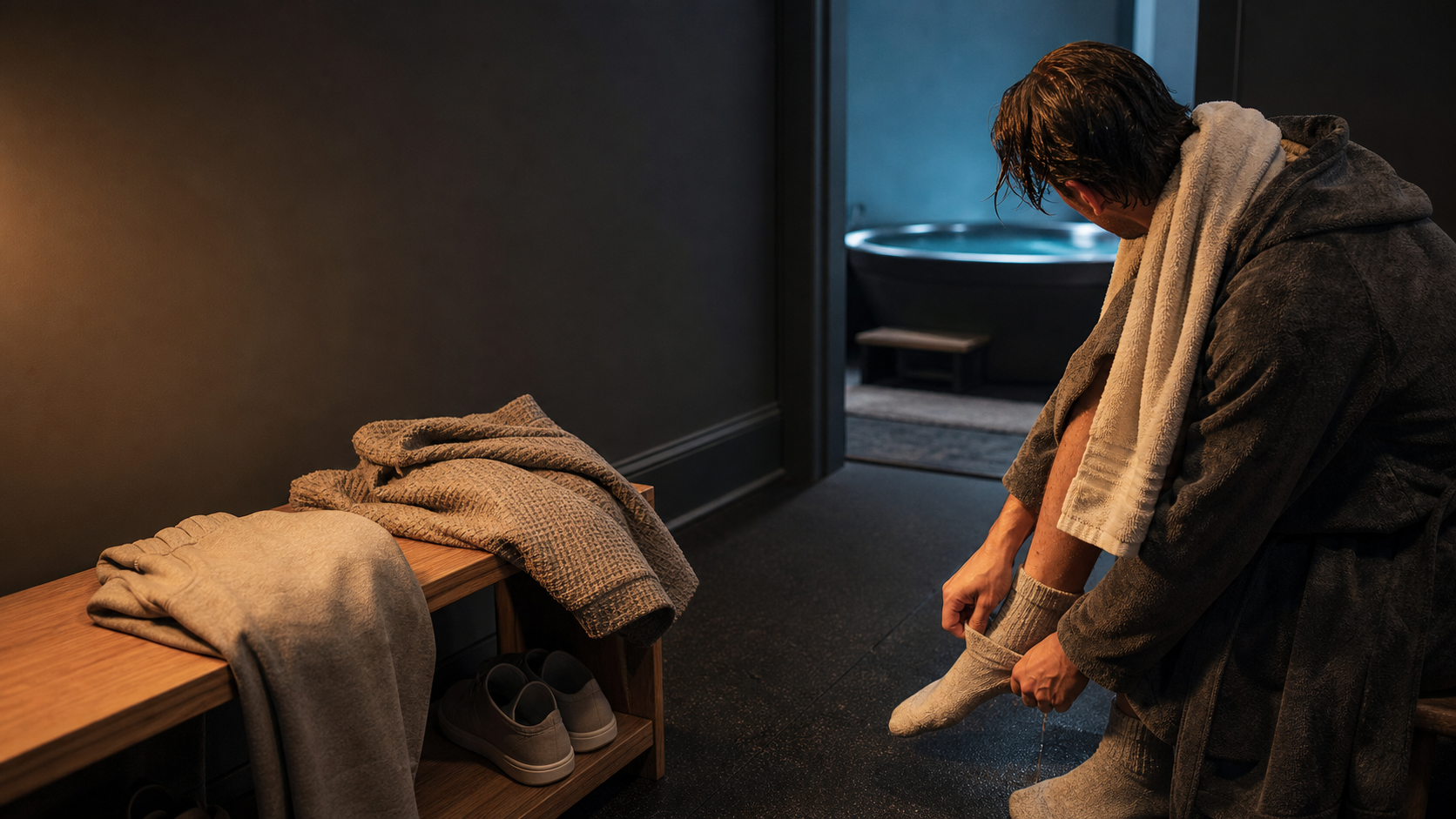
Stage the right gear before the plunge: one absorbent towel, a robe that opens easily, loose sweatpants, a sweatshirt, dry socks, and shoes you can put on without balancing on one foot. Our guide to what to wear in a cold plunge includes a complete before-and-after clothing checklist.

3. Add comfortable layers

Dry layers trap warm air and reduce ongoing heat loss. Start with clothing that is easy to handle, then add a blanket if needed. Cover cool feet with dry socks and keep them off a cold floor. A hat can be practical after an outdoor plunge, but it is optional indoors; dry clothing and a warm environment matter more than a special accessory.

Avoid wrapping a very hot heating pad or hot-water bottle directly against numb skin. Reduced sensation can make it harder to judge temperature. If you use an external heat source, follow its instructions, keep a fabric barrier in place, and choose gentle warmth rather than maximum heat.

4. Use gentle movement, not a hard workout

Once you are dry, dressed, alert, and steady, walk slowly around a warm room or use easy arm circles and relaxed bodyweight movement. The purpose is to help you feel comfortable and coordinated—not to set a fitness record. Stop if movement increases dizziness, nausea, weakness, or shortness of breath.

Hard exercise immediately after immersion adds a separate strain and can be a poor choice when your grip, balance, or judgment is not fully normal. If your plunge followed a training session, let the recovery goal drive the timing rather than stacking more exertion. See how long to wait after a workout before a cold plunge for the workout side of the routine.

5. Choose a warm drink only when alert

A warm drink can make the rewarming routine more comfortable. Water, caffeine-free tea, or another familiar nonalcoholic drink is a simple option. It should be warm enough to enjoy, not hot enough to burn. Only drink when you are fully awake, sitting or standing safely, and swallowing normally.

Alcohol is not a rewarming tool. It can impair judgment and may make a person feel warm without proving that the body has recovered safely. Keep the post-plunge routine boring and repeatable: dry clothes, comfortable room, gentle movement, normal fluids, and time.

Should you take a hot shower or sauna?

You do not have to ban a shower, but you also do not need to jump directly into extreme heat. First dry off, dress, and confirm that you are alert, coordinated, and no longer numb. If you choose to shower, use comfortably warm—not scalding—water, keep the floor safe, and stop if you become dizzy or unwell.

A sauna creates another strong temperature exposure. Beginners should not use it as emergency rescue for an overly aggressive plunge. If you intentionally practice contrast therapy, plan both exposures in advance, keep them conservative, and review whether to cold plunge before or after sauna. Do not improvise a hot-cold sequence because you are struggling to warm up.

How long should warming up take?

There is no universal timer. After a short, appropriately chosen plunge, you should trend toward feeling steadier and more comfortable once you are dry, dressed, and indoors. Mild shivering may happen, but it should not become your goal or the price of completing a preset duration.

If every session leaves you shivering hard or feeling cold for a long time, change the next protocol: use warmer water, shorten the immersion, improve the exit setup, or skip the plunge until you can discuss the response with a qualified healthcare professional. More discomfort does not automatically mean more benefit.

Warning signs that need more than a warm robe

These signs can indicate a medical emergency. Call local emergency services and follow their instructions; do not leave the person alone or force food or drink if alertness is impaired. Anyone with cardiovascular or circulation concerns, uncontrolled blood pressure, a history of fainting, pregnancy concerns, neuropathy, cold-triggered breathing problems, or medication that changes temperature response should ask an appropriate healthcare professional whether cold immersion is suitable.

Build the warm-up station before you plunge

  1. Lay a nonslip mat beside the exit and clear the walking path.
  2. Open a towel and robe so they are ready to grab.
  3. Set out loose dry layers, socks, and slip-on shoes in order.
  4. Prepare a warm indoor space and close off cold drafts.
  5. Tell a responsible person what you are doing if you are new.
  6. Set conservative water temperature and time limits before entering.
  7. End the plunge while you remain calm, coordinated, and able to exit under control.

The easiest warm-up is the one you never have to troubleshoot. A sensible temperature, a brief exposure, continuous breathing, and an early exit reduce the chance that aftercare becomes a rescue. If the initial gasp is still the hardest part, use the beginner cold-plunge breathing routine before trying colder water.

Bottom line: Warm up after a cold plunge by exiting slowly, drying completely, changing into easy warm layers, and moving gently in a comfortable room. Add a warm nonalcoholic drink only when fully alert. Skip extreme heat and intense exercise while numb or unsteady, and treat confusion, poor coordination, chest symptoms, breathing trouble, or failure to improve as reasons to get help. Find more conservative routines on the IronThaw Blog and the complete cold-plunge guide.