Affiliate Disclosure: Some links in this article are affiliate links. If you purchase through them, IronThaw earns a commission at no extra cost to you. This article is for informational purposes only and is not tax or medical advice — confirm your specific situation with your plan administrator, tax advisor, or physician before making a purchase.

Short answer: yes, all three can be HSA/FSA eligible — but none of them are automatically eligible just because you bought them. Cold plunge tubs, infrared saunas, and red light therapy devices all sit in the IRS's gray zone of "dual-purpose" items: things that have general wellness use but can also treat a specific medical condition. The difference between "just a wellness purchase" and "a legitimate tax-advantaged medical expense" comes down to one document: a Letter of Medical Necessity (LMN).

This guide breaks down exactly what qualifies, what doesn't, how to get the paperwork that makes it official, and which brands make the purchase itself frictionless. If you're already planning to buy a plunge tub, sauna blanket, or red light panel, this is likely the single highest-leverage 15 minutes you'll spend on the purchase — it can knock 20–40% off the real cost depending on your tax bracket.

Quick Primer: What HSA and FSA Actually Cover

You likely already know the basics, so the short version: a Health Savings Account (HSA) is a tax-advantaged account available if you have a high-deductible health plan — contributions are pre-tax (or tax-deductible), grow tax-free, and withdrawals for qualified medical expenses are tax-free. Unused funds roll over indefinitely. A Flexible Spending Account (FSA) is employer-sponsored, also pre-tax, but generally follows a "use it or lose it" calendar year (some plans allow a small carryover or grace period).

Both account types are governed by the same underlying definition of a "qualified medical expense," found in IRS Publication 502. The core standard: an expense qualifies if it's paid "for the diagnosis, cure, mitigation, treatment, or prevention of disease" and is not for something that is merely "beneficial to general health." That one clause — general health vs. treatment of a specific condition — is the entire ballgame for cold plunge, sauna, and red light therapy purchases.

The Core Rule: Dual-Purpose Items Need an LMN

None of the three product categories in this guide appear by name on the IRS's standard eligible-expense list, the way, say, a thermometer or crutches do. They fall into what the IRS and plan administrators call "dual-purpose" expenses — items that could be for general wellness (not reimbursable) or for treating a diagnosed medical condition (reimbursable). For dual-purpose items, the IRS and virtually every HSA/FSA administrator require a Letter of Medical Necessity: a document from a licensed healthcare provider stating that the item is medically necessary to treat, mitigate, or prevent a specific condition you have.

Without an LMN, using your HSA/FSA card on a cold plunge tub, sauna, or red light panel is a purchase your administrator can flag or deny — and for HSA funds specifically, an unqualified withdrawal taken before age 65 triggers ordinary income tax plus a 20% penalty. With a valid LMN on file, the same purchase becomes a fully qualified medical expense. Same product, same price — the paperwork is what changes the tax treatment.

Cold Plunge: Eligibility Status

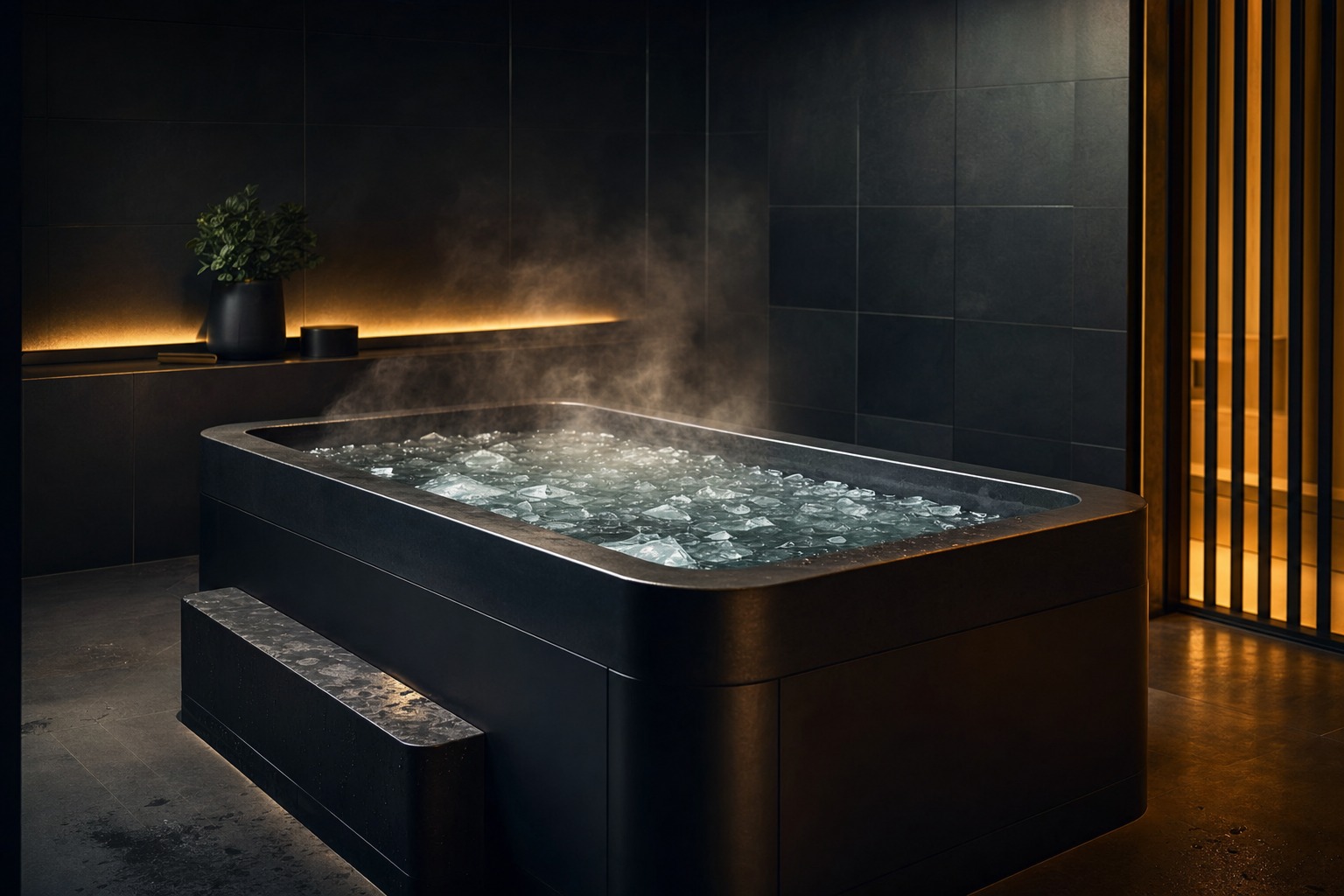
Cold plunge tubs are conditionally eligible. According to eligibility databases maintained by major HSA/FSA administrators, cold plunge tubs "may be eligible with a Letter of Medical Necessity (LMN) with a prescription" for HSA, FSA, and HRA accounts (Lively). They are explicitly not eligible under dependent care FSAs or limited-purpose FSAs.

The conditions most commonly cited in successful LMNs for cold plunge include:

Documentation that strengthens a cold plunge LMN: a clear diagnosis code, a specific treatment plan referencing frequency and duration of use (e.g., "3–4 sessions per week, 3–5 minutes, 50–59°F"), and ideally a note tying the device to an existing treatment plan rather than a standalone purchase. Services like Truemed have built a streamlined intake process specifically for this — you complete a clinical questionnaire, a licensed provider reviews it, and if approved, issues the LMN digitally, which you then use to justify the HSA/FSA charge.

⭐ Most LMN-Friendly Cold Plunge

Plunge Original+ — $2,990

Plunge is one of the most established brands in the LMN ecosystem — its popularity among physical therapists and recovery clinics means providers are generally comfortable writing letters of necessity for it. Stainless steel basin, chiller to 37°F, 3-year warranty.

Check Price on Plunge.com

Infrared Sauna: Eligibility Status

Infrared saunas follow the same conditional pattern as cold plunge — not automatically eligible, but reimbursable with an LMN. The IRS treats heat therapy the same way it treats cold therapy under Publication 502: acceptable when it's treating a diagnosed condition, not acceptable when it's general relaxation or wellness.

The conditions most frequently cited in approved sauna LMNs:

Practical tip: an LMN for a full sauna cabin or a portable sauna blanket is treated identically by administrators — what matters is the diagnosis and treatment plan, not the form factor. A sauna blanket is also significantly easier to justify from a cost standpoint if your HSA/FSA balance is limited, since it runs a fraction of the price of a cabin.

Best for LMN-backed FSA/HSA purchases

Higher Dose Sauna Blanket

HigherDOSE is a named partner brand in HSA/FSA facilitation programs, meaning the eligibility and LMN workflow is already built into checkout for qualified buyers. Far infrared heat, portable, and a fraction of the cost of a full cabin — a practical entry point for a chronic pain or circulation-focused LMN.

View Higher Dose Sauna Blanket

Red Light Therapy: The Strongest Case of the Three

Of the three categories in this guide, red light therapy has the strongest documentation trail for HSA/FSA eligibility. Like cold plunge and sauna, red light devices are not on the IRS's standard eligible list and still require an LMN — but the clinical evidence backing specific, diagnosable conditions is deeper and more specific, which makes the letter easier for a licensed provider to justify and easier for an administrator to approve.

Conditions with published clinical support that are commonly cited in red light therapy LMNs:

Because red light devices span a wide price range — from handheld units to full-body panels — and because several manufacturers have FDA-cleared indications already documented for their specific hardware, providers can often write more precise, defensible LMNs for red light therapy than they can for a general-purpose sauna or plunge tub. Brands including HigherDOSE, Mito Red Light, Celluma, Hooga Health, Bon Charge, Chroma, and Therasage are named partners in LMN facilitation programs like Truemed, meaning the eligibility process is pre-built into their checkout flow for qualified buyers (Truemed).

⭐ Strongest Clinical Case for HSA/FSA

Mito Red Light Panel

Mito Red Light is a named HSA/FSA partner brand with a documented LMN pathway. Full-spectrum red and near-infrared output backed by third-party irradiance testing — the kind of specification detail that makes a provider's medical necessity letter easy to write and easy for an administrator to approve.

View Mito Red Light Panel

How to Get a Letter of Medical Necessity

An LMN is a short clinical document — usually one page — that a licensed healthcare provider writes on your behalf. There are two paths to get one:

Path 1: Your Existing Doctor

  1. Book an appointment (telehealth works fine for most providers) and describe your symptoms — chronic pain, poor circulation, anxiety, a diagnosed skin condition, etc.
  2. Ask directly for a Letter of Medical Necessity for the specific device category (cold plunge, infrared sauna, or red light therapy) as part of your treatment plan.
  3. Make sure the letter includes: your diagnosis, why the device is necessary to treat it (not just beneficial), the recommended frequency/duration of use, and the expected duration of treatment (some administrators want this renewed annually).
  4. Submit the LMN to your HSA/FSA administrator along with your itemized receipt, either at time of purchase or if requested during a substantiation review.

Path 2: Telehealth LMN Services

Services like Truemed have built an entirely online intake process specifically for this use case: you complete a clinical questionnaire about your health history and symptoms, a licensed provider reviews it, and — if they determine the device is medically necessary — issues the LMN digitally, often within the same purchase flow. This is faster than scheduling with your primary care provider and is increasingly the default path retailers point customers toward at checkout.

Either path produces the same outcome: a document that converts a "maybe" purchase into a documented qualified medical expense. Keep a copy indefinitely — HSA distributions can be reviewed years later, and you want the paperwork on hand if that happens.

Which Retailers Accept HSA/FSA Cards Directly

A growing number of recovery brands have integrated LMN issuance directly into checkout, so you never have to separately track down a provider. At the time of writing, brands with a built-in HSA/FSA and LMN workflow include HigherDOSE, Mito Red Light, Celluma, Hooga Health, Bon Charge, Chroma, Therasage, iRESTORE, Lumebox, NovaaLab, and Hairmax (Truemed partner list). For cold plunge and larger sauna cabins where a brand doesn't offer built-in LMN checkout, you'll typically get the LMN independently (via your doctor or a telehealth LMN service) and then either pay directly with your HSA/FSA debit card or pay out of pocket and submit for reimbursement with your itemized receipt and LMN attached.

Regardless of path, always keep: the itemized receipt, the LMN itself, and — if applicable — proof of the diagnosis it references. Administrators can and do request substantiation, and incomplete paperwork is the most common reason a legitimate claim gets denied.

Step-by-Step: Maximizing HSA/FSA for a Home Recovery Setup

  1. Identify your qualifying condition first. Before buying anything, think about what you'd actually tell a doctor — chronic pain, poor sleep, anxiety, a skin condition, cardiovascular concerns. This determines which products are easiest to justify and shapes what you ask for in Step 2.
  2. Get your LMN(s) before you buy, not after. It's easier to secure documentation upfront than to retroactively justify a purchase during an audit. If you're buying more than one device, ask whether a single visit can produce letters covering multiple items tied to the same treatment plan.
  3. Check your account balance and plan type. FSA funds are use-it-or-lose-it on a calendar year (with limited exceptions), so time larger purchases accordingly. HSA funds roll over, giving you more flexibility to save toward a larger setup.
  4. Prioritize by strength of clinical case. Red light therapy for a documented skin or pain condition is typically the easiest approval. Sauna and cold plunge for chronic pain or cardiovascular concerns are next. Save "general wellness" framing for nothing — it's the fastest way to get an LMN rejected.
  5. Buy from brands with built-in LMN workflows when possible. It removes a step and reduces the odds of a documentation gap.
  6. Keep every document. LMN, itemized receipt, and diagnosis reference — stored somewhere you can retrieve them years later.
  7. Renew your LMN if your administrator requires it. Some plans treat LMNs as valid for one year; check your plan's specific policy so a renewal purchase doesn't lose eligibility.

Best value for a full recovery stack

RecoverEx Ice Bath Pro

If you're building out a full home recovery setup and want to stretch your HSA/FSA dollars further, RecoverEx offers strong insulation and filtration at a lower total cost of ownership than premium competitors — meaning more of your qualified spend goes toward the equipment itself rather than ongoing running costs.

View RecoverEx

Frequently Asked Questions

Is a cold plunge tub HSA or FSA eligible?

Not automatically. A cold plunge tub isn't on the IRS's standard list of qualified medical expenses, so a plain purchase isn't reimbursable on its own. It becomes eligible once a licensed healthcare provider issues a Letter of Medical Necessity stating the tub is needed to treat a specific diagnosed condition — chronic pain, an inflammatory condition, or a mood disorder are the most commonly cited. With that LMN on file, HSA or FSA funds can be used for the purchase.

Do I need a prescription to buy a sauna or cold plunge with HSA/FSA funds?

You need a Letter of Medical Necessity, which functions similarly to a prescription in this context. It has to come from a licensed provider, name your specific diagnosis, and explain why the device is medically necessary for treating it. Some administrators and telehealth services can complete this process entirely online without an in-person visit.

Is red light therapy more likely to be HSA/FSA approved than a cold plunge or sauna?

Generally, yes. Red light therapy has a larger, more specific body of published research tied to discrete conditions — acne, psoriasis, eczema, chronic joint pain — which makes it easier for a provider to write a defensible LMN. Cold plunge and sauna claims tend to be broader, which some administrators scrutinize more closely, though both can still qualify with proper documentation.

What happens if I use my HSA/FSA card for wellness equipment without an LMN?

You risk the purchase being flagged during an audit or plan review. For HSA funds, an unqualified withdrawal taken before age 65 is subject to ordinary income tax plus a 20% penalty. FSA administrators may require repayment if the expense isn't substantiated within their required window. Always secure and retain your LMN before completing the purchase.

The Bottom Line

Cold plunge, infrared sauna, and red light therapy are all viable HSA/FSA purchases in 2026 — but none of them are eligible by default. The Letter of Medical Necessity is the entire mechanism that converts these from "wellness gadgets" into qualified medical expenses, and getting one is faster than most people expect, especially with telehealth options built directly into brand checkout flows. If you're going to make the purchase either way, spending 15 minutes on documentation first is the difference between paying full price and paying with pre-tax dollars.

Subscribe for more

Get The Recovery Dispatch — Free

Weekly protocol notes, exclusive discount codes, and new guide alerts. 3,400+ subscribers.

Join the Newsletter