Affiliate Disclosure: IronThaw may earn a commission when future partner links are added. This informational guide contains no paid product placement, fake reviews, or placeholder product buttons.

Short answer: Red light therapy is generally more predictable on exposed skin. Clothing can absorb, reflect, or scatter some of the light, so the dose reaching a covered area is uncertain. You do not need to undress completely: expose only the area you want to target, keep other areas covered for comfort, and follow your device manual for distance, duration, and eye protection.

Home red light panels make a session look simple: turn on the device and stand nearby. Then practical questions appear. Do you need bare skin? Does a thin shirt count? Can near-infrared light pass through fabric? The honest answer is that some light may pass through some materials, but clothing adds a variable that most beginners cannot measure.

Red and near-infrared light therapy, also called photobiomodulation, depends on the light that actually reaches tissue—not merely the brightness visible in the room. Fabric sits between the device and skin, and its color, thickness, weave, stretch, and moisture can all change transmission. If you want a repeatable home routine, removing that variable is usually the sensible choice.

Clothing vs exposed skin at a glance

Setup What it means Beginner guidance
Exposed target areaNo fabric barrier between the panel and intended skin area.Most consistent default; use the manual’s distance and time.
Thin, light fabricMay transmit some light, but the delivered amount remains uncertain.Do not assume the normal exposed-skin dose reached the covered area.
Dark or thick clothingLikely blocks or absorbs more of the incident light.Expose the target area instead of extending the session to compensate.
Non-target areas coveredKeeps privacy and comfort while another area is exposed.A practical option; only count the exposed area as intentionally treated.

Why fabric changes a red light session

A device emits particular wavelengths at a particular output, but the dose at your skin also depends on distance and anything in the light path. A loosely woven white shirt and a dense black sweatshirt are not equivalent. Seams, graphics, multiple layers, and compression fabric add more variation. Even if you can see red light glowing through a garment, that does not tell you how much useful light reached the skin.

Near-infrared light is invisible and can penetrate tissue differently from visible red light, but that does not make clothing transparent to it. Without measurements for your exact fabric and device, increasing exposure time is guesswork. More time may also overexpose uncovered areas while still delivering an unknown dose beneath the garment.

Do you need to be completely naked?

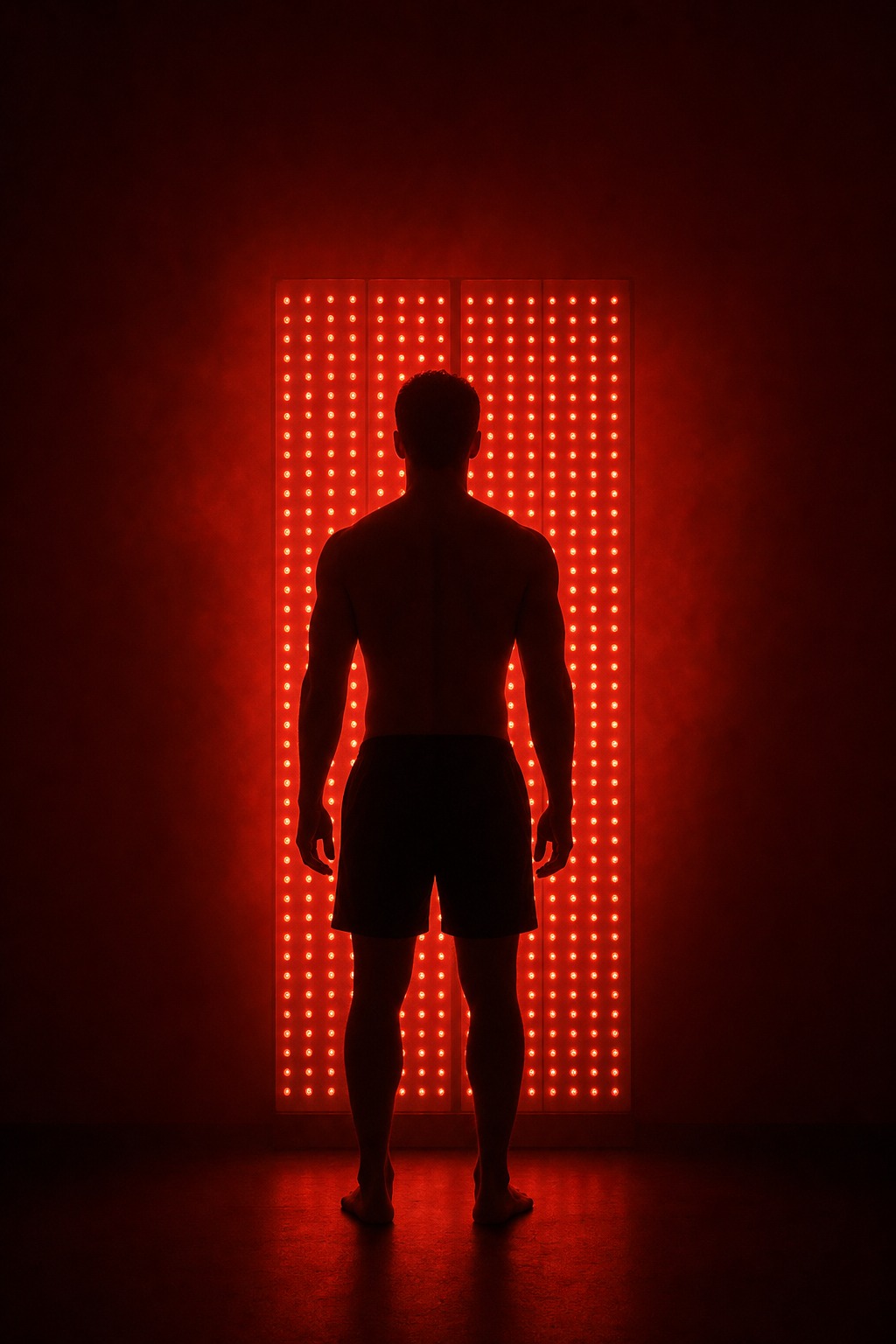
No. Red light therapy is not all-or-nothing. If your goal is to expose your quadriceps, for example, shorts may be enough. For shoulders, a sleeveless top or removing one layer may work. You can keep underwear on and cover any area you do not want illuminated. The practical rule is to uncover the target, not your entire body.

Privacy matters because a routine you dislike is difficult to sustain. Use a lockable room, position the panel before changing clothes, or treat one smaller area at a time. A targeted session may take more repositioning than a full-body session, but it can be easier to perform consistently.

A simple beginner setup

  1. Choose one target area. Start with a manageable region rather than trying to expose your entire body.
  2. Read the device manual. Confirm the recommended distance, exposure time, frequency, eye guidance, and contraindications.
  3. Expose clean, dry skin. Remove clothing only from the intended area. Do not apply products that the manufacturer warns against.
  4. Measure distance. Use the same position each session. Our red light therapy distance chart explains why a few inches can change exposure.
  5. Start conservatively. Use the lower end of the manufacturer’s range and avoid doubling time to chase faster results.
  6. Track the routine. Record area, distance, duration, and frequency so you can repeat the setup instead of improvising.

What about creams, sunscreen, and makeup?

Clothing is not the only possible barrier. Cosmetics and skin products vary, so check the manual rather than assuming every product is neutral. Many beginners choose clean, dry skin because it creates a simpler and more repeatable setup. Do not stop a prescribed topical medication merely for a light session; ask the prescribing professional whether the medication or condition changes your light-sensitivity risk.

If your session is for workout recovery, consistency still matters more than elaborate preparation. Decide whether red light therapy before or after a workout fits your schedule, expose the muscle area you intend to target, and keep the device variables stable.

Common mistakes to avoid

Safety and realistic expectations

Follow the instructions for your specific device. Do not stare into intense LEDs, and use eye protection when the manufacturer recommends it. Stop if you develop headache, eye discomfort, unusual skin irritation, dizziness, or another concerning symptom. Ask a qualified healthcare professional before use if you have a photosensitive condition, significant eye concerns, active cancer concerns, pregnancy concerns, or take a medication that may increase light sensitivity.

Red light therapy may be a useful addition to a routine, but it is not a replacement for medical care, sleep, sensible training, nutrition, or recovery time. The evidence varies by goal, device, and protocol. Keep your expectations modest and your setup repeatable. For frequency planning, see how often beginners should use red light therapy.

Frequently asked questions

Does red light therapy work through a shirt?

Some light may pass through a thin shirt, but the amount varies too much to treat it as a predictable dose. Expose the target area when possible.

Does a panel need to touch bare skin?

No. Most panels are non-contact devices used at the distance stated in their manual. Bare target skin does not mean pressing the LEDs against your body.

Can I wear underwear during a session?

Yes. Cover areas for privacy and expose only the area you intend to treat. Do not count covered areas as receiving a known dose.

Bottom line: You can remain partly clothed during red light therapy, but expose the body area you want to target. Fabric makes the delivered dose uncertain, and extending time is not a reliable fix. Keep the manufacturer’s distance and duration, cover non-target areas as desired, and explore the IronThaw Blog or the complete red light therapy guide for more beginner routines.