Product-link disclosure: Product links are provided for reference. IronThaw does not currently earn commissions from these links. Editorial choices are independent of any future affiliate relationship.
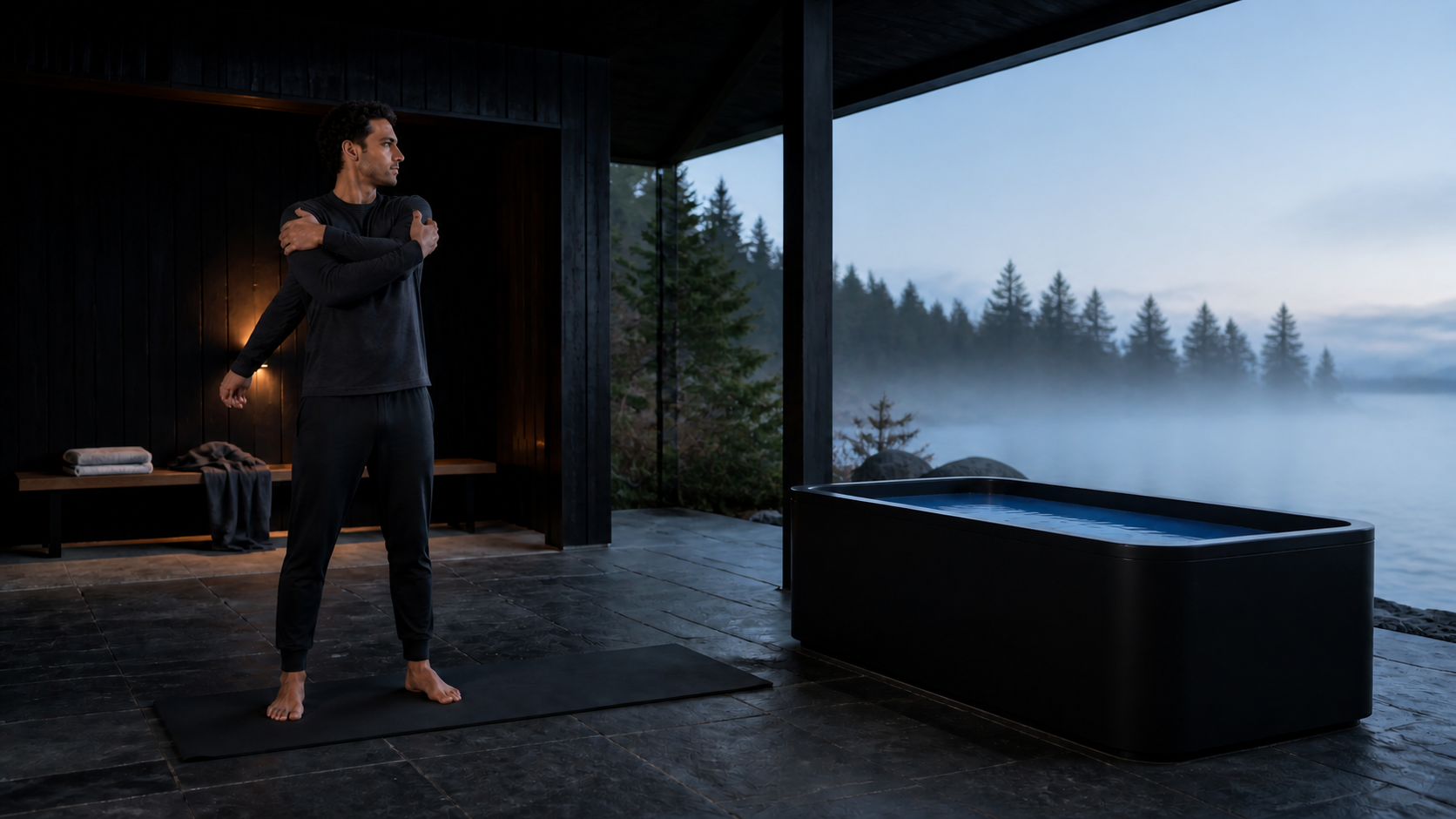
Short answer: Research does not establish a required warm-up routine or duration before home cold-water immersion. Preparation should focus on a stable setup, continuous breathing, supervision, symptoms, and a reliable exit—not on using exercise to tolerate colder water.
What preparation can and cannot do
Easy movement may change how someone feels before entry, but the cited cold-water reviews do not establish a universal pre-immersion warm-up. Warming up does not remove cold-shock risk or make an aggressive temperature, duration, depth, or setup safe.
| Check | Verify | Do not infer |
|---|---|---|
| Starting condition | Alertness, balance, breathing, hydration, symptoms, and relevant health guidance | That feeling warm proves readiness |
| Equipment | Measured water temperature, exact instructions, stable entry, supervision, and unobstructed exit | That another person's setup transfers |
| Movement | Comfortable, ordinary movement only if desired | That a fixed warm-up duration is evidence-based |
| After exercise | Breathing, balance, exertion, training goal, and professional plan | That immediate immersion is universally appropriate |
Practices to avoid
- Hard exercise, sauna, or hot water used as permission for more extreme cold.
- Hyperventilation, deliberate breath holds, face immersion, or underwater challenges.
- Entry while dizzy, confused, unsteady, impaired, unable to control breathing, or unable to exit reliably.
- A timer, warm-up count, or social-media protocol used to override symptoms.
Health limits
Cardiovascular, blood-pressure, circulation, respiratory, neurologic, pregnancy, medication, fainting, or temperature-regulation concerns require qualified guidance. Stop for chest pain, severe shortness of breath, confusion, weakness, loss of coordination, faintness, or another concerning symptom.
Evidence and safety sources
Cold-water studies vary by population, temperature, duration, and outcome and do not establish a universal pre-immersion warm-up. The National Weather Service describes involuntary gasping and rapid breathing during cold shock.
Sources: health and wellbeing systematic review; post-exercise recovery systematic review; National Weather Service cold-water safety.