Affiliate Disclosure: IronThaw may earn a commission when future partner links are added. This informational guide contains no paid product placement, fake reviews, or placeholder product buttons.
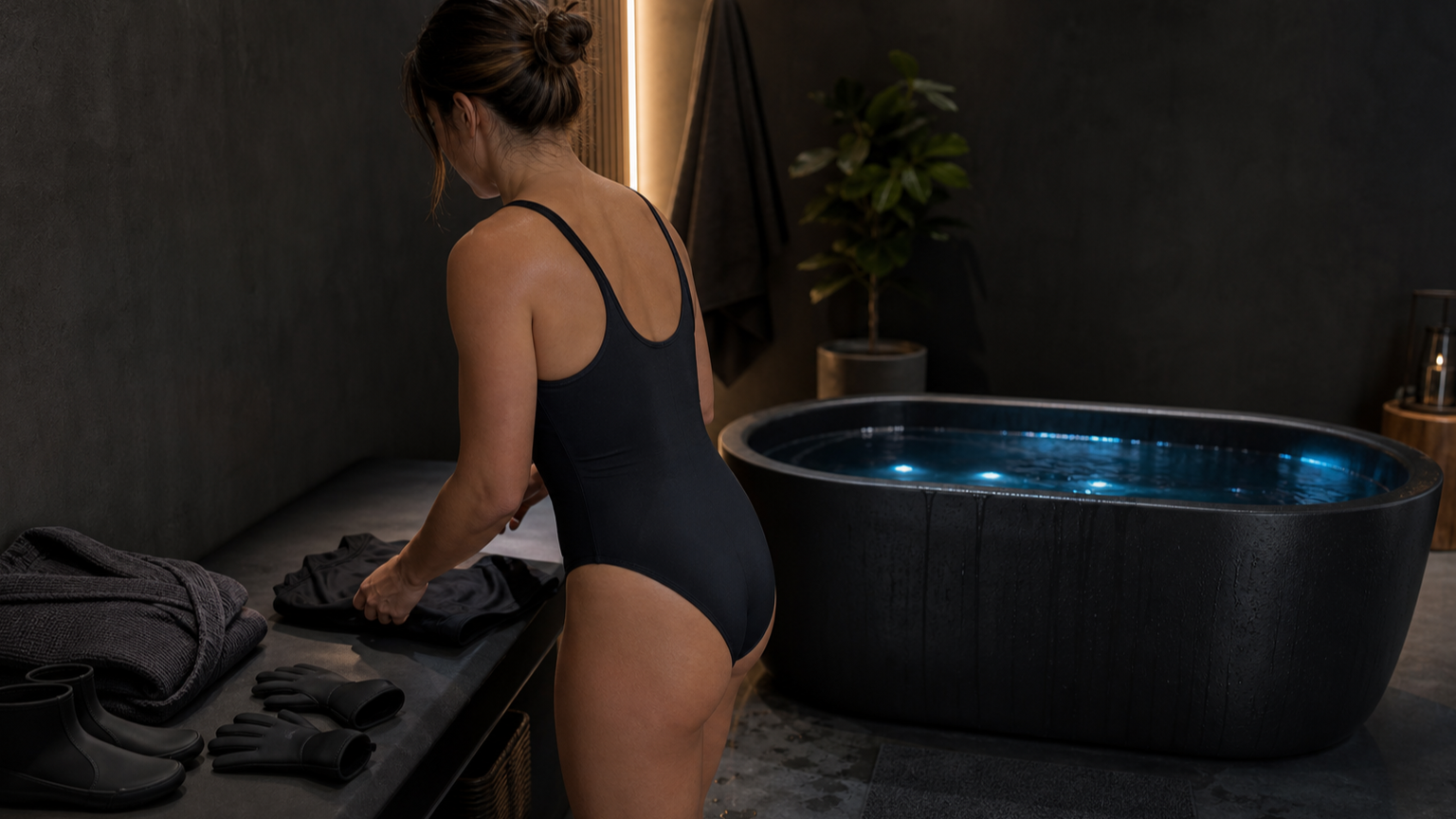
Short answer: Wear a simple, close-fitting swimsuit for a cold plunge. Neoprene gloves or booties are optional if your hands or feet become painfully cold, but they should fit securely and preserve your grip and balance. Skip loose, heavy, or absorbent clothes. Before entering, place a dry towel, robe, warm layers, and slip-on shoes within easy reach for your exit.
Cold-plunge clothing should make the session simpler—not turn it into an equipment project. For most home setups, ordinary swimwear is enough. The more important preparation happens outside the tub: a clear path in and out, traction underfoot, dry layers nearby, and a temperature and duration you can manage calmly.
What feels appropriate can vary with water temperature, session length, outdoor weather, and individual cold sensitivity. Clothing does not make an aggressive protocol safe. Start conservatively, and review a beginner cold-plunge temperature chart before trying colder water or longer sessions.
Cold-plunge clothing at a glance
| Item | Wear in the water? | Beginner guidance |
|---|---|---|
| Fitted swimsuit | Yes | The best default: light, secure, and easy to move in. |
| Neoprene booties | Optional | Can reduce foot discomfort; choose a grippy sole that does not complicate entry or exit. |
| Neoprene gloves | Optional | May help cold-sensitive hands, but must not weaken your grip on a rail or tub edge. |
| Full wetsuit | Usually no | Often unnecessary for a short home plunge and changes the exposure substantially. |
| Robe, towel, dry layers | Afterward | Stage them within reach before entering; do not climb into the tub wearing them. |
The best default: fitted swimwear
Choose the same kind of swimsuit you would trust for swimming. It should remain secure when wet, allow you to bend your knees and step over the tub wall, and avoid loose straps or fabric that could snag. Swim trunks with a secure waistband, fitted swim shorts, a one-piece suit, or a simple two-piece can all work.
Avoid using bulky cotton shorts, sweatpants, T-shirts, or underwear as substitutes. Absorbent fabric becomes heavy, holds cold water against the body after you exit, and may limit movement. Loose pockets can also fill with water. If modesty or outdoor privacy is a concern, use purpose-made swim layers rather than everyday clothes.
Should you wear gloves or booties?
Hands and feet often feel cold quickly. Snug cold-water gloves or booties may make a beginner session more tolerable, especially when the main goal is practicing a calm entry rather than maximizing discomfort. Their insulation means those covered areas receive less direct cold exposure, which is not a problem if you account for it honestly.
Safety and mobility come first. Booties should have clean, grippy soles and fit without folding or slipping. Gloves should let you hold a handrail or tub rim securely. Confirm that your tub manufacturer permits the gear, and never use bulky accessories that make climbing out harder. If the water feels painfully cold despite a conservative setup, exit rather than relying on thicker gear to force a longer session.
Why most home plunges do not need a wetsuit
A full wetsuit is designed to reduce heat loss, so it changes the experience far more than small gloves or booties. For a brief, controlled home plunge, it is usually extra complexity. A wetsuit may make sense for prolonged open-water activity, a cold outdoor environment, or a specific professional plan, but those scenarios are different from sitting briefly in a home tub.
Do not use a wetsuit as permission to stay in excessively cold water longer. Insulation varies with thickness, fit, water flushing, and body area. If you need a full suit to tolerate the planned temperature, a warmer and shorter beginner protocol may be the better adjustment.
What to have ready for afterward
- A dry towel: place it where you can reach it without walking across a wet floor.
- A robe or loose warm layer: choose something easy to put on with damp skin and cool hands.
- Dry base layers: remove wet swimwear and change in a private, warm space when practical.
- Slip-on footwear: use dry shoes with traction rather than walking barefoot on a slick surface.
- A clear exit route: move cords, clutter, pets, and unstable stools before you enter.
Warm up gradually with dry clothes and comfortable indoor movement. Avoid immediately using very hot water, a sauna, or another extreme unless an appropriate protocol and your health context support it. If you plan contrast sessions, read whether to cold plunge before or after sauna and keep the first attempt conservative.
Accessories and clothing to avoid
- Loose or absorbent clothing: it can become heavy, cling to the body, and restrict movement.
- Jewelry and watches: remove nonessential items that can snag, feel painfully cold, or be damaged by water.
- Socks without grip: ordinary wet socks can become slippery and offer little predictable insulation.
- Head coverings that block awareness: keep your face and airway clear and maintain full awareness of your surroundings.
- Anything untested at the exit: if gloves or shoes make the step-out awkward, do not use them in the tub.
A simple first-session clothing checklist
- Put on fitted swimwear and remove jewelry.
- Decide whether snug, grippy booties or gloves are genuinely needed.
- Place a towel, robe, dry clothes, and slip-on shoes within arm's reach.
- Confirm the floor is dry enough for safe entry and the exit path is clear.
- Check water temperature instead of estimating by feel.
- Use calm, continuous breathing; never hyperventilate before or during immersion. See our cold-plunge breathing routine.
- Exit while you still feel coordinated and in control.
Safety notes before you get dressed
Never cold plunge alone if you are new, and never enter after alcohol or impairing substances. Keep your head above water unless you have qualified supervision and a protocol designed for immersion. Stop immediately for chest pain, severe shortness of breath, confusion, loss of coordination, numbness that affects safe movement, or another concerning symptom.
Ask a qualified healthcare professional before cold-water immersion if you have cardiovascular or circulation concerns, uncontrolled blood pressure, a history of fainting, cold-triggered breathing problems, pregnancy concerns, neuropathy, or another condition that may change your response. Clothing is a comfort choice; it cannot remove the cardiovascular and cold-shock demands of immersion.
Frequently asked questions
Can I wear normal clothes in a cold plunge?
Use swimwear instead. Everyday clothes can absorb water, become heavy, snag, and make you colder after the session.
Are gloves and booties cheating?
No. They simply change the exposure at your hands and feet. If they help you use a conservative routine with better control, they can be practical—as long as they do not reduce grip or balance.
Should I wear a hat?
A warm hat may be useful for an outdoor setup, but keep it secure and keep your face unobstructed. For a short indoor plunge, it is usually optional rather than necessary.
